Friday, November 2, 2012

In Service Training


The second half of October was a busy time for me (finally!) as I was busy attending our In-Service Training in Musanze. Musanze is beautiful city located in the north of Rwanda. From the balcony of our hotel we could see the breathtaking Virunga Volcanoes, which form the border between Rwanda, the DRC, and Uganda. They are also the home to the famous Silverback Mountain Gorillas, which is the main tourism draw in Rwanda (although a permit is currently running at $750 which means I probably won’t be seeing gorillas anytime soon).

The weekend before our training started some of us met up in Kigali to do a little shopping, drink some cold beers, and just catch up. Unfortunately for us, a group of Education volunteers working on a TESOL project in the city we also planning on crashing at the Case de Pasage (fancy French name for the shitty Peace Corps Hostel in Kigali). By the time Darren and I arrived there were no beds left, which means we ended up spending the night on the floor. It was pretty uncomfortable and Darren managed to leave with 111 mosquito bites (he counted). I think I got 3 but I probably complained just as much. Early Sunday morning we decided to get out of Kigali and visit our friend Amanda, who lives about 30 minutes away from Musanze. The bus ride up north was both beautiful and terrible. The scenery truly is breathtaking. I realize I’ve already used that word in this post, but I really can’t think of any other way to describe it. The farther north you go, the greener everything becomes and the steeper it gets. Unfortunately for those with weak stomachs (me), the ride is horrible. The bus goes around and around and definitely does not do it slowly. Luckily, one of my comrades was packing some motion sickness medicine so I managed to survive the journey. Once we finally arrived in Musanze, it was late and we began looking for a moto driver to take all five of us to Amanda’s house.

On the road to Amanda's house.
Now, if I thought the bus ride was bad, the moto ride was 100 times worse. Because of the heavy rain in the northern part of the country the roads wash out very easily, and a short motorcycle ride can turn into a treacherous journey. One of our friends fell off; another one lost some of her belonging during the bumpy ride. Once we finally reach Amanda’s house my legs we shaking so hard I could barely stand. That night we cooked some soup and gathered around her small living room (she has a beautiful house!) telling stories and reminiscing over our past three months at site. The next morning we made a plan to go on a short hike to see a waterfall nearby. Amanda’s village could hardly handle the group of abazungu making their way around town and we managed to say mwaramutse {good morning} to hundreds of people. 

Trying to dodge the mud.
We began walking through some of the fields that lead to the waterfall and tried our best to avoid the muddy paths, but it was no use, by the end of our trip all of our shoes were caked in mud. We were getting a little lost but stumbled upon a small abatwa village where they were making pots out of clay and firing them in a giant bonfire. After some quick words and unclear directions, the women ended up ordering one of the young boys to accompany us to find the isumo {waterfall}. We soon had a parade of about twenty kids following us, and it seemed to grow larger and larger in each town that we passed through. We finally reached the elusive falls and were treated to beautiful views of the Virunga Volcanoes.

Making pots to sell at the market.
 After returning home to finish our breakfast we got back on some motos to make our way to the hotel. The moto ride was just as bad the second time around, the only difference is that I got to walk my shaken up body to my luxurious hotel room. Okay, it wasn’t that luxurious, but seeing as I’ve been living in the boons for the past six months it seemed like heaven on earth. Spring mattresses! Hot showers! Breakfast, lunch, and dinner! No banana mash!

Although the hotel was nice, the training itself, unfortunately, wasn’t all that great. For weeks some of us Health 4 volunteers had been working with the staff to make our In-Service training more in tune with our needs and wants but it seems they didn’t take too much of our constructive criticism to heart and a lot of the training proved to be a wasted effort. Despite that, there were a few bright moments. We have a new Director of Programming and Training and he seems really optimistic about making Rwanda an ideal post (a fancy term to mean a good Peace Corps country to serve in). I have always believed that if Peace Corps invested a little bit more into the program here, Rwanda is set up to be one of the best posts in East Africa, so I was happy to hear him talk about this. At the end of our weeklong training, we had an additional three days to discuss Behavior Change and Project Design/Management. Our counterparts joined us for these last few days and I think this proved to be one of the most successful components of the training as it gave us an opportunity to get all of us on the same page about what we can do as volunteers in our community.

Virunga Volanoes.
 Once the training was over I took the long journey home, which basically involved driving from one end of Rwanda to the other. It was exhausting and what’s worse is that when we arrived home we could see that the road leading to my village was washed out due to three days of nonstop rain. Last night, after contemplating what to eat for dinner a lady showed up at our door selling fish from the river by our house. Considering she was selling them for about 75¢ a pop we quickly bought a bunch and I went about cleaning and preparing the fish for dinner. It was a nice alternative goat meat (the only real meat you can get to eat here) and as long as the rainy season continues I think we are going to be treating ourselves to many more fish dinners.

IST proved to be the reboot I was hoping for and that I desperately needed. The week before I left I was feeling a little depressed about everything and I think ten days away from site in a fun city was exactly what I needed. I feel reenergized about what I am here to do and am happy that the counterparts who joined me at the training are now excited about working with me on various projects. Time will tell about whether or not their enthusiasm persists, but for right now I’m going to be idealistic about it all. After all, isn’t that why you join Peace Corps?

Halloween Party. Seeing as I already have a scar on my head,
I was Harry Potter.

Wednesday, October 17, 2012

Rural Women's Day

Rwanda loves its holidays. This past Monday was Rural Women's Day, and I attended a celebration in the district capitol of Nyakarambi. When my roommate and I arrived the audience was...sparse. It seems somebody did a bad job of advertising and so at the last minute they sent out scouts out to recruit some rural women to...you know...go celebrate being rural women. Nonetheless, once the ceremony got started (one hour after if was scheduled to end) it was actually a lot of fun. There was even a traditional dance performance by some of the local High School kids, I got some video but seeing as the internet here is running only 10kb/second I wouldn't expect to see it on YouTube anytime soon.

For most of the ceremony there was nice weather, that is until the Mayor of Kirehe began his speech. Suddenly a black cloud began racing towards us and the tent we were sitting under began to lurch. One of the local soldiers began calling able men to help hold it up but everyone seemed more interested in saving themselves. I looked over at my roommate who screamed 'Let's get the f*ck out of here!' (he just learned about the 'f-word') and soon I was pushing him as fast as I could run to the car. The scene has descended into chaos and in the background I could hear the mayor begging everyone to just 'remain calm.'

Just then, the tent blew over.


Thursday, October 4, 2012

Bon Appétit


I would have to estimate that I think about food about 70% of the day (I’m hungry a lot). Admittedly, I’m not imagining myself eating Rwanda food, because really, it’s nothing to write home about. Despite that…I’m writing home about it.

The food here is probably just as delicious as you can imagine it being. One of the things I’ve become accustomed to eating (AKA it’s what’s for supper everyday) is agatogo. Agatogo is a stew made from ibitoki, a kind of rock hard, unripe banana that’s sticky to the touch. After peeling with a knife you basically boil the bananas into a mush. It looks like [vomit]. Tastes like [vomit+bananas]. Also, it costs about as much as [vomit], that is to say, its costs almost nothing. One bowl of agatogo and you won’t need to eat for the rest of the day, it’s basically glue in the stomach. It also means you can expect to have a bowel movement about once every four days. When I first began eating it, it really made me gag, but I’ve seemed to develop a certain affinity for it. Now, I have to make a confession here, my roommate and I have a cook. She is an old lady and we refer to her as the umuceceru {old lady}. Now before you think that I’m heartless, please realize that she asked us to call her that. She cooks agatogo every night, and does my laundry because no matter what I will never be able to wash clothes in a bucket with one cup of water. Together we pay her about a dollar a day, which I’ve been told is overpaying.

Admittedly, eating agatogo all of the time can do some seriously crazy things to the digestive tract, so we also spice it up a bit. Sometimes we eat rice. If you are feeling real ambitious you can put beans on the rice. If you are crazy you can also crush peanuts and make a delicious peanut sauce. We were eating mushrooms for a while, but it turns out that the man who cultivates them decided he could make a lot more money being a moto taxi driver. Sometimes we buy macaroni and I make macaroni with tomato sauce, but whenever I decided to cook I have to put up with dirty looks from the umuceceru, so I usually cave and let her take over. One time, she caught me cooking for myself and threatened to not come back…so…I’ve stopped doing any household chores.

Now I have to admit, the food isn’t all bad, which brings me to the exciting part of this discussion…bar food! Bars in Rwanda aren’t like the kind back home. They are mostly large empty rooms filled with plastic furniture, lit by a single fluorescent bulb that is usually flickering on and off, and full of drunk abasaza {old men}. The beers are warm, the peanuts stale, but just like America they are great places to meet up with friends, have a few laughs, be harassed by host country nationals, and eat some food.

The typical bar food in Rwanda are brochettes and chips. Brochettes are very similar to the kebabs that you would eat back in America. They are essentially sticks of goat meat, rubbed up and down with spices and piri piri pepper (or as Rwandans say: pelee pelee), then thrown onto an open fire. Sometimes they are delicious and you can’t believe God could be so good to you, sometimes they come and the meat is a little overcooked but you eat them anyway because, hey, it’s not agatogo. But sometimes…sometimes you spend more time trying to discern what part of the goat they gave you than you do actually eating. Usually, if the meat looks this gross, it tastes even worse. When a bar does this I put them on my bar ‘shit list,’ and make sure to avoid them like the plague. Brochettes are usually accompanied very well with a plate of chips. For about $1.25 you get a giant plates of French fries, a salad of raw onions, and a huge slab of mayo. It’s so good you can cry.

Disclaimer: I feel like I should point out that, would I ever be served this type of food in a bar in America I would probably find it all very disgusting. But here…I’m just that hungry.

My new favorite type of bar food is akabenzi, you may know it better as pork, commonly understood to be the most delicious of all meats. One of my favorite bars serves a ‘pork platter.’ For roughly $3.00, you get a giant platter filled will deep fried potatoes and spices, topped with ONE KILO OF AKABENZI, and the icing on this cake: raw onions. It’s delicious and the perfect meal for a couple of people. Just don’t expect to get much work done the next day; it has the opposite effect of agatogo (see above).

Of course, all of these foods need a nice beverage to compliment their flavors. Primus is, in many ways, the national beer of Rwanda. It’s been around for a while and .75 liters only costs a dollar. Of course you can sometimes down three of these and then you stop to think that holy crap I just drank over two liters of beer! Yeah, the next morning is not a fun one. I also like Mützig, similar to Primus but a little sour tasting sometimes. And my favorite is Turbo King. The posters call it the Alcohol for Men, so ladies, ordering on of these puppies will bring about so discriminating looks. It’s a darker beer (a nice change change from Primus, which tastes like Bud Light with a rusty nail in the bottom), and has an alcohol content of about 7%. A few of these and you will be real goofy, but be aware before you order that the bartender is going to have a new one on the table and uncapped as soon as you finish the one in front of you.

The longer I’ve been here I realize each day is a new adventure and I still have so much more to learn about this amazing country. Except the food. I feel like I can pretty much say I’ve had it all and now I’m ready for a Big Mac.

Thursday, September 20, 2012

Explosions!


Monday morning I work up (groggy as usual) and opened the windows to get some fresh air blowing through the house. Upon swinging open the window and breathing in a huge breathe of air I realized I was actually breathing in a bunch of smoke. In fact, the entire village was covered in a fog of it, all coming from the mountain overlooking Rusumo. Now, being in Rwanda, my first thought was that maybe that mountain is actually a volcano. If you’ve been reading the recent news out of Guatemala, that seemed like a pretty scary thing to be happening.

I walked to work for the morning meeting and I could see the rumor mill was already spinning. Everybody was trying to figure out just what was going on. Many of the people I work with live in my market town, Nyakarambi, which happens to be located on the mountain, and seeing as they weren’t there for the meeting I could only surmise that they had died fiery deaths in whatever was going on up there.

Later in the day I got my answer. It turns out an oil tanker coming from Tanzania crashed into another car. As everyone got out (I can only assume to argue about what happened. The truth is the truck drivers drive like idiots) the tanker, being filled with oil, exploded!

Yesterday I went to visit my friend Miranda (the other volunteer in my district) in Nyakarambi, and on the way there drove by the scene of the accident. What I saw was insane. A giant oil tanker, charred and black as night, was covered by about fifty people with machetes, slowly taking it apart. It seemed crazy to me at the time, but how else would they take it apart?! There’s obviously no tow trucks, and I’m sure somebody’s going to find good use for a bunch of burnt metal.

I know this stuff happens back home, probably more often that we know. The thing is when it happens here it seems all the more surreal.

Sunday, August 26, 2012

Rusumo, My New Home

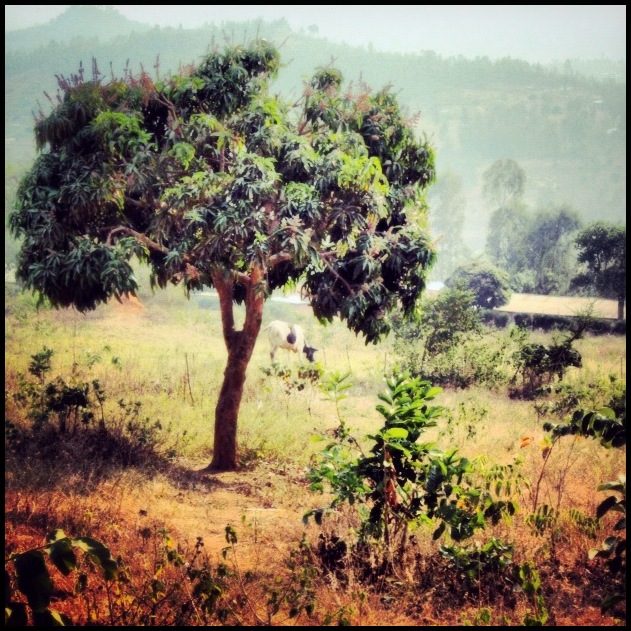
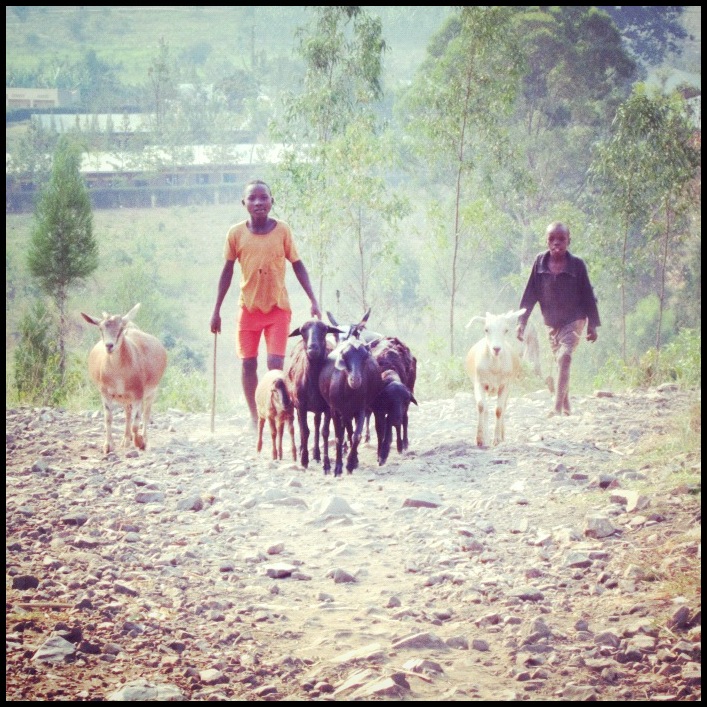
The other day I was taking a leisurely stroll around the neighborhood and snapped a few pictures of my new home.


Saturday, August 18, 2012

Experiencing Rwandan Medical Care, Firsthand...


It began like any other night. The sun was setting over the mountains like a runny Spanish omelet on a cheap diner plate. I was alone. Well, as alone as one can be in Rwanda. I had just finished eating my supper, rice and wild mushrooms (delicious, but also a gamble every time you eat them…one of these days I’m probably going to ingest a poisonous one). After supper I decided to walk over to my Health Center to use the internet. Thanks to a grant from Partners in Health, we have WiFi all over the center. It’s not exactly high speed, but really I’ll take what I can get. The strongest signal can be found in the waiting room, which usually means you’ll have a small crowd gathered around you to see what you are doing. On this particular night I could see from out my window that the lobby and waiting room were empty, prime time to use the WiFi! I began locking my doors and heading down the hill.

Now, somewhere along the way, the power went out. Living here in Rwanda I’ve realized there’s a big difference between ‘having power’ and having power. For example, I ‘have power’ in the sense that there’s a light bulb in my bedroom as well as a [single] electrical outlet to charge my things. But, that doesn’t necessarily mean that I have power, because really it’s out about 50% of the time. When the power goes out at night, it’s dark. Very dark. Because of this I’ve become accustomed to always carrying around a small flashlight in my pocket so that I can see where I’m going. As soon as I saw the lights die, I began fishing around in my pocket for my flashlight when...WHACK! I had tripped in one of the water drainage ditches that run around the health center (a necessity when living on the side of a mountain) and hit my head on a brick wall.

I was a little dizzy, and without my glasses (god knows where they flew) I couldn’t exactly see what was going on, but when I went to pick up my computer case I saw that it was a bloody mess. As were my pants and shirt. Not sure if the blood was coming from me I put my hand up to my forehead and…yup it was me alright. A little scared I then remembered that I’m at a freaking health center! I began walking down the corridor to the on call room hoping to maybe get a band aid and be on my way. As I began walking the blood was shooting out of me like old faithful and I came to the realization that I may be needing more than just a little gauze. Upon reaching the duty nurse’s office I saw that she was with a patient but nothing could stop me at the point, I busted open the door with all of my force and then realized I had no idea what to say; I simply pointed my tiny flashlight at whatever was going on up on my head and much to my dismay I got a ‘ya baba we!’ {oh my god!} from both the nurse and the patient! They quickly cleared off the stool that was stacked mile high with papers and began putting gauze on my forehead.

Now, maybe I suffered a mild concussion, or maybe I was just a little scared, but in that moment I couldn’t speak a word of Kinyarwanda. Or French. Or Swahili, or any of the languages swimming around in my head right now. Another nurse entered and they were checking out my head and then motioned for me to go lay on the bed, the next thing I know they were whispering to each other and I distinctly heard the word kudoda {verb:to sew}. I realized I needed stitches, but I could remember our Peace Corps doctor’s stern warning to never use the local Health Centers for medical care, and so I immediately pulled out my phone and called him. The nurse looked at me like I was crazy, making a social call at a time like this!
Hello, he said. Dr. Elite I’ve fallen and busted my head and now I’m here in the Health Center and I can’t speak Kinyarwanda and I think I need stitches and they showed me in the mirror and it looks bad and I’m scared and I think I want you to talk to them and maybe tell them what I should do I just don’t know, I say. Okay give her the phone, he says. [brief interlude where they talk in rapid Kinyarwanda, then, phone is handed back to me] Okay Ian, it looks like since you are so far away from me we’re just going to go ahead and let her give you the stitches, but I should warn you that these are really bad stitches and there’s a possibility you’re going to have a big scar. Good night, and good luck!

Not exactly comforted by his words they laid me down on the table and began cleaning out the wound. Keep in mind the power is still out and so she put the flashlight in her mouth, bit down on it, and began sewing me up. Now, without any kind of numbing or pain killers I’m not afraid to say that I began crying like a little baby. It HURT! But survived, and after washing all the blood of my face (head wounds bleed like crazy!) I realized it really doesn’t look all that bad at all. I also feel stupid for crying, because everyone here survived a genocide and I was scared about a few stitches. But it was a pretty horrible experience and I think I’m going to start following my roommate’s advice from this morning to watch where I’m going (what kind of advice is that?!) because I don’t want any more incidents.

and now for something completely different

I’ve been at site for just over a month now and so far (last night aside), everything has been going really well. Before we left training we were assigned with drawing up a plan for our initial three months, a blueprint for integrating at site. While glancing over the plan yesterday I realize that I’ve already accomplished a large portion of the things that I had wanted to. Since being here I’ve successfully gotten my home in order, gotten aquainted with everyone working at the Health Center, met and spoken with dozens of community health workers, introduced myself to local officials, and met with NGOs working in the area. Miranda, another volunteer in Kirehe district, and I have also arranged a meet and greet with hospital staff in the provincial capitol. We are looking forward to meeting with them and building a relationship over the next two years.

So things are looking up…but maybe from now on I should start looking down more often. You know, to see where I’m going.

Friday, August 17, 2012

Training

The past two weeks I've been busy helping with with Community Health Worker training at my site. Community Health Workers (or abajyanama b'ubuzima in Kinyarwanda, try saying that ten times fast!) are locally picked volunteers who work in their respective communities promoting health, passing out meds when needed, checking in on HIV+ patients, etc. The list is endless, and since the program began almost 7 years ago there has been a dramatic decline in the number of deaths reported.

This training was specific to the maternal specialists. They are responsible for checking in on pregnant women living in their umudugudu {village} and checking their progress, giving them advice, and encouraging them to visit the Health Center for prenatal care. It was an interesting few weeks and I too learned a lot. Some topics covered: breast feeding (I've seen lots of boobs here, all I'm saying), checking newborns' pulses and breathing for irregularities, weighing said newborns, and of course, the always important how to properly fill out le fiche {the mother's medical record}. Though the training was certainly interesting, it was also pretty boring most of the time, I was crammed into a tiny wooden bench along with a bunch of ladies, and the classroom we were using (the students are on summer break too) was so hot I could barely breathe. Not sure how any learning goes on there in the afternoon! The experience was good, but I'm ready to get back to work at the Health Center next week.

*     *     *

Liliose, my counterpart, teaching. She is the head of the community health workers.

Lots of babies at the training.

Role playing, some of these went on for over an hour! I think Rwanda needs a community theatre.

He never stopped smiling, he may have been the only one happy to be there!

Packed in like sardines!

At the end of the week we take the workers into the community to put them to the test!